OpenStreetMap Attribution for Products You Sell
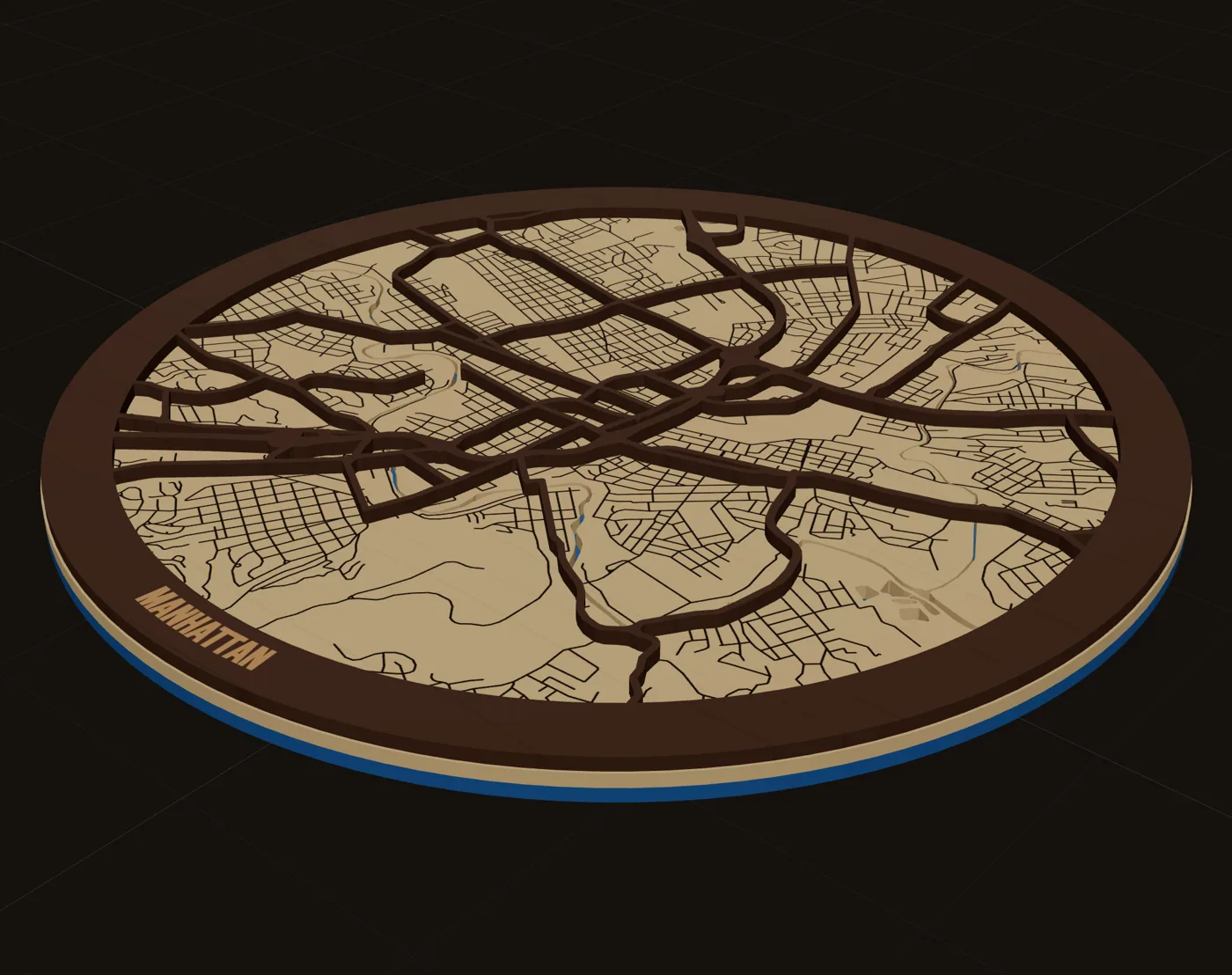
If your map pieces use OpenStreetMap streets, you can sell them. You just need to credit the data. This is a short, practical guide to OpenStreetMap attribution for products: what to write, where to put it, and what the license does and doesn't ask of you.
The short version
- Commercial use is allowed. OpenStreetMap data is free to use, including for products you sell.
- Credit is required when the piece is used publicly, and selling it counts.
- Put the credit in three places: the listing or point of sale, the packaging, and on the item itself where you can.
- Use this text: "© OpenStreetMap contributors, openstreetmap.org/copyright".
The license: ODbL and "Produced Works"
OpenStreetMap data is published under the Open Database License (ODbL). A map you make from that data, such as a laser cut map, is what the license calls a Produced Work. The OpenStreetMap Foundation's FAQ says you can license a Produced Work under any terms you like, and there are no fees to use the data.
So you own your design and can sell the piece. The one firm duty is attribution: people who see the work should be able to tell that the map data came from OpenStreetMap and that it is available under the ODbL.
OpenStreetMap attribution for products: what the guideline says
The OSMF Attribution Guideline has a section for artwork, household goods and clothing. It is the one that covers laser maps.
Physical merchandise with an aesthetic component using OpenStreetMap data must provide attribution on any packaging, at the point of sale, and, to the extent possible, somewhere on the item itself. For example, merchandise may provide attribution text in the vicinity of the image, or on the item's label or tag. The text must be readable and include the URL openstreetmap.org/copyright printed out.
OSMF Attribution Guideline, Artwork, household goods, and clothing
| Where | What to do |
|---|---|
| Point of sale | Add the credit to the listing or product page, for example at the end of the description. |
| Packaging | Print it on the box, bag, insert card or care card. |
| On the item | Engrave it small on the back, or on a label or tag. "To the extent possible" means where it fits; on a tiny ornament, a tag may be the practical spot. |
The text must be readable, so don't engrave it at a size nobody can read. The URL has to be printed out in full, because a physical object can't carry a link.
The wording
The guideline says attribution must be to "OpenStreetMap" and must make clear the data is under the ODbL, which the copyright page explains. The historical forms "© OpenStreetMap contributors" and "© OpenStreetMap" are acceptable. You may also qualify it, for example "Map data from OpenStreetMap," since you rendered the data to your own design.
- Listing or card: Map data © OpenStreetMap contributors, openstreetmap.org/copyright
- Back of the piece: © OpenStreetMap contributors openstreetmap.org/copyright
In MappSmith, the "Message on the back" field is an easy place to put the credit so it is engraved with every piece.
Other data in the piece
OpenStreetMap is not the only source in many map pieces. Elevation and lake depth come from other publishers, which may have their own terms and credits. In MappSmith, elevation comes from Copernicus DEM data and lake depths from public lake surveys. Map styles from other services (for example ones built on Google data) are not OpenStreetMap and carry different terms. Check the terms of every source you use before you sell.
Questions makers ask
Can I sell laser maps made from OpenStreetMap data?
Yes. Commercial use is allowed. A map made from the data is a Produced Work you can license and sell under your own terms, as long as you credit OpenStreetMap.
Where do I put the OpenStreetMap credit on a physical product?
On the packaging, at the point of sale such as your listing, and on the item where possible, for example engraved on the back or on a tag.
What exactly should the credit say?
Use "© OpenStreetMap contributors" with the URL openstreetmap.org/copyright printed out. "Map data from OpenStreetMap" is also acceptable.
Does share-alike mean I have to give away my design?
No. Share-alike applies to the data and to databases you derive from it, not to the map piece you design and sell.
Updated 2026-10-17
Read next
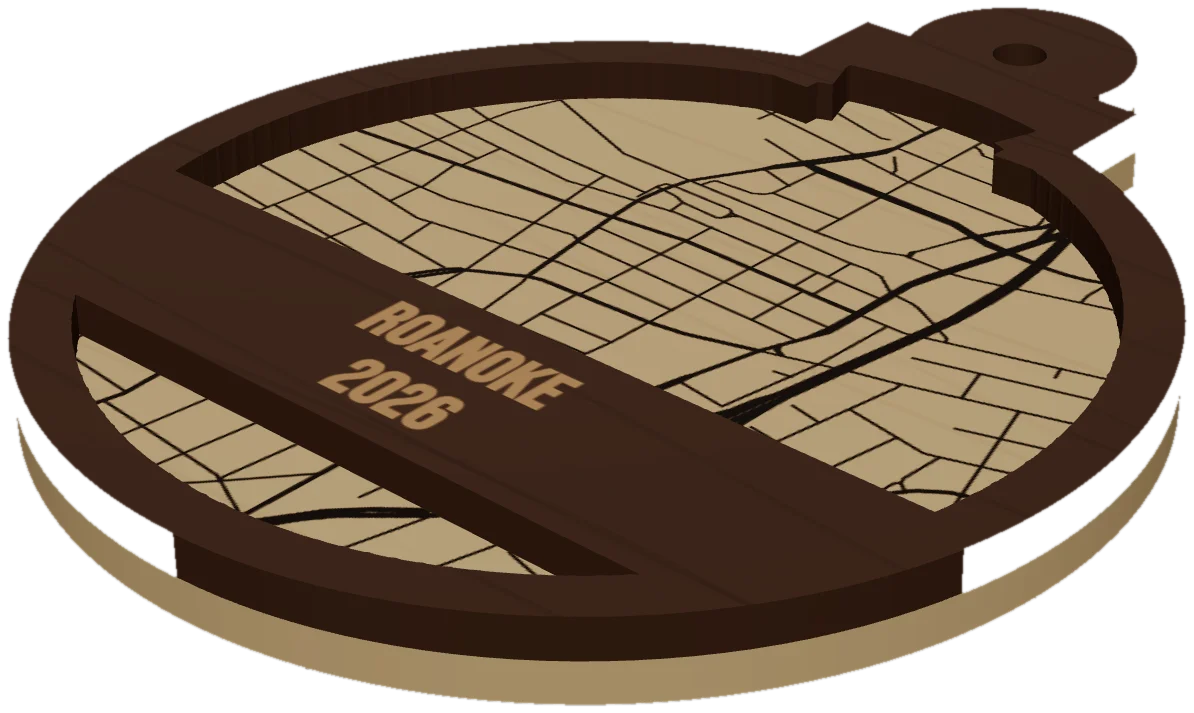 GuideWhy Map Ornaments Sell (and How to Make the Math Work)Why map ornaments sell comes down to three things: a place carries a memory, the wood costs pennies, and the season does your marketing for you. Here is the math, the calendar and the ornament ideas to sell, plus the one part of the job that quietly eats your profit.
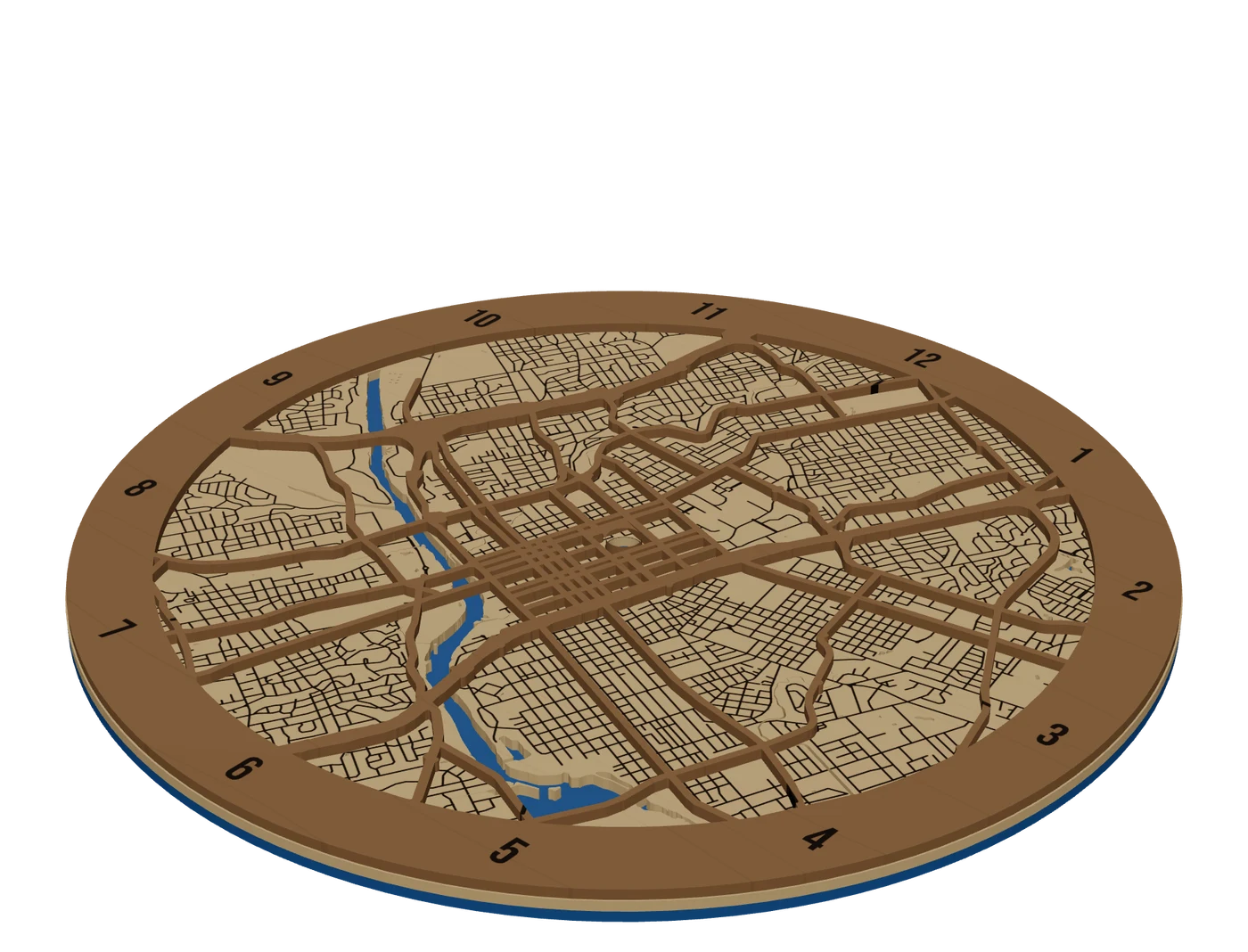 Selling mapsAdding laser maps to your offeringsWhere to sell laser maps, a starter product ladder, pricing, turnaround and upsells.FAQMappSmith FAQAnswers about files, machines, data and plans.
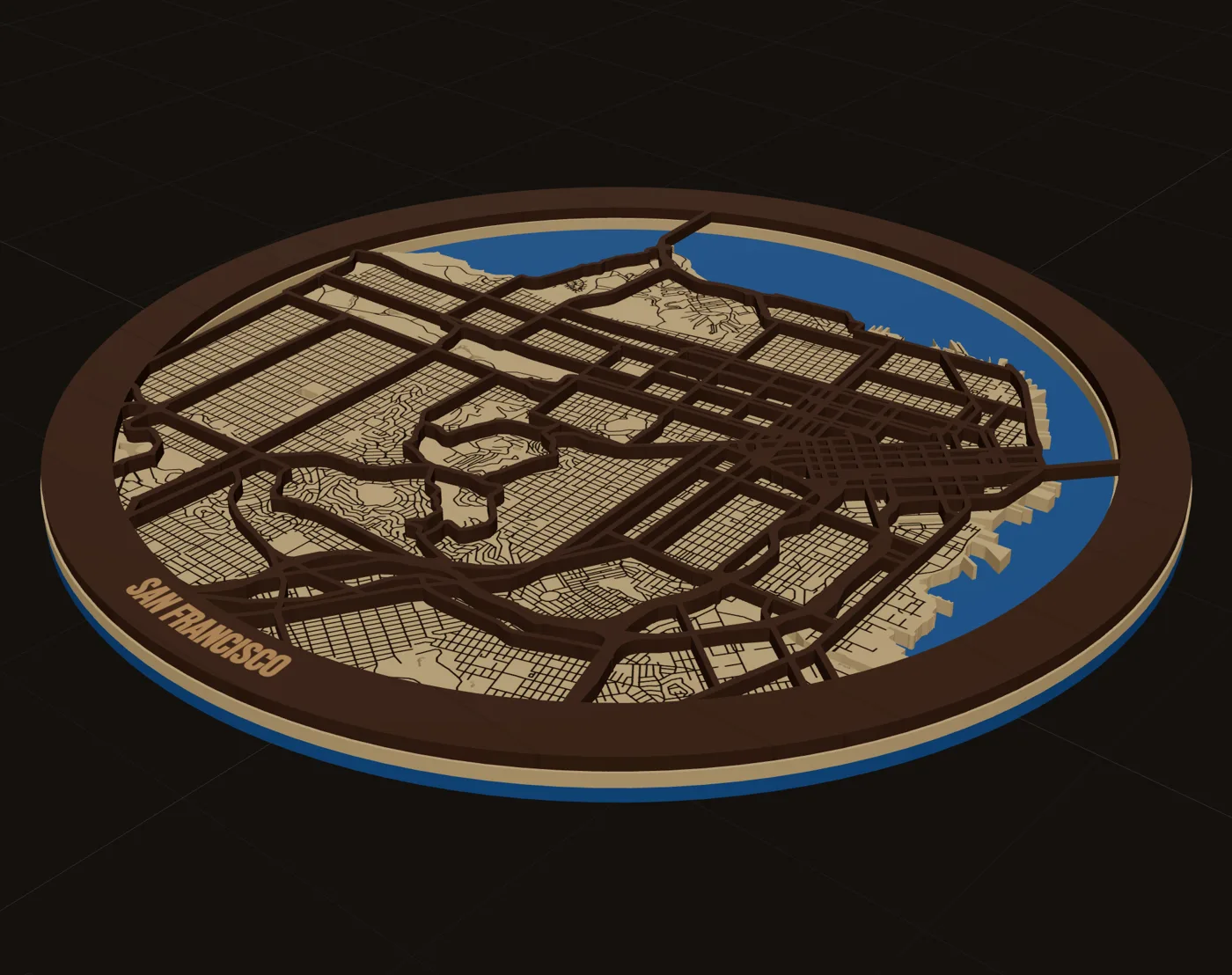 GuideHow to Make a Laser Cut Map: The Free Way and the Fast WayThis is how to make a laser cut map that holds together, reads at a glance and sells. We cover the free manual route with OpenStreetMap and vector software, the faster route in MappSmith, and everything after the file: crop, layers, wood, settings, glue and finishing. Use whichever route fits your shop. The craft is the same.
Turn this into a file you can cut.
Every step above happens in one browser tab. Try it on your own hometown.
7 days free, then $12 a month. Cancel anytime. Or 10 maps for $10.
— more from MappSmith
Everything else this app gives you.
Free tools, libraries and guides — most of it works before you pay for anything.